
How to choose a web design company in 2026
Oct 9, 2026 10 min read
How to choose a web design company in 2026
By Scott Garrison

In this article
- Why choosing a web design company matters more in 2026
- How to choose a web design company in five steps
- Step 1: Decide what the website has to do
- Step 2: Pick the right kind of web design company
- Step 3: Shortlist on proof, not portfolio
- Step 4: Questions to ask a web designer before you sign
- Step 5: Get ownership in writing
- Red flags when hiring a web design company
- What should happen after launch
- How we do it at Goat Sites
- How to choose a web design company: FAQs
TL;DR
Here's how to choose a web design company: pick the one that can explain how your new site will win you business, not just the one with the prettiest portfolio. Then check their proof, ask the right questions before you sign, and get ownership of everything in writing.
Most website projects that go wrong fail in the same few places: nobody owned the message, nobody measured anything after launch, or the client didn't own their own site. This guide covers how to avoid all three.
Why choosing a web design company matters more in 2026
Your website now does most of the selling before anyone talks to you.
- Buyers research alone. 61% of B2B buyers prefer a buying experience without a sales rep.16
- The website is the next stop after reviews. 54% of local consumers go to a business's website after reading positive reviews, and 66% keep researching before they buy.14
- An outdated site costs trust. DreamHost's late-2025 survey found 69% of US adults see a website as essential to a local business's credibility, and three in five trust a business less when its site looks old.13
- Fewer people click through. When Google shows an AI summary, users click a regular result on 8% of visits, versus 15% without one.15 The visitors you do get are more valuable, and your site has to convert them.
First impressions form fast. In a well-known 2006 study, people judged a website's visual appeal in 50 milliseconds, and that snap judgment colored how they rated everything else.6 A later Google study found that simple sites that look like what people expect in their category win those first impressions.7 And in Stanford's large 2002 credibility study, a site's design and look came up in 46.1% of people's comments about whether they trusted it, more than any other factor.8
How to choose a web design company in five steps
Here's the process in order: decide what the site has to do, pick the right kind of provider, shortlist on proof, ask the hard questions, and get ownership in writing.
Step 1: Decide what the website has to do
Before you look at a single portfolio, write down what the site is for. For a service business, that usually means:
- Who you want to hear from, and who you don't
- What a visitor should understand in the first few seconds
- The one action you want them to take: book a call, request a quote, download something
- How you'll know it's working: calls booked, form fills, revenue
Good web design companies start here. Every top-ranking guide says to define your goals first,25 but few say why: Nielsen Norman Group found users often leave a page within 10 to 20 seconds, and a clear value proposition is what earns a longer visit.11 If you can't say what you do and who it's for in one sentence, no designer can make that obvious for you.
Step 2: Pick the right kind of web design company
Not every business needs an agency, and if you're working out how to choose a web designer versus a full firm, start here. Here's how the options compare, using typical published price ranges. These are industry estimates, not surveys, so treat them as a starting point.
| Option | Typical published cost | Best when |
|---|---|---|
| DIY or AI website builder | About $100–$500 a year20 | You're early, the site is simple and you have the time |
| Freelancer | $500–$7,000220 | Scope is clear and you already have your strategy and copy |
| Small agency or studio | $3,000–$20,0002 | You want strategy, design, development and some content in one place |
| Full agency | $5,000–$25,000+20 | Complex builds, integrations or several decision-makers |
Cheaper isn't always cheaper. GoDaddy warns that low-cost builds often skip testing, optimization and security updates,3 and Moburst notes that prices far below market usually mean template work or upsells mid-project.4
Step 3: Shortlist on proof, not portfolio
A beautiful portfolio tells you someone can design. It doesn't tell you their sites work. When you shortlist:
- Look for relevant work, ideally in your industry or for businesses that sell the way you do.25
- Ask for results. Before-and-after numbers on traffic, leads or revenue separate agencies that build assets from agencies that build brochures.4
- Call references, and treat a company that can't produce recent ones as a red flag.2
- Check who writes the copy. Atak Interactive is one of the few guides that asks whether a firm has its own copywriters.5 For a service business, the words do most of the selling.
- Ask about conversion. A company should be able to describe how the site turns visitors into inquiries.5
Quick check
How does your web designer measure up?
Tick everything the company you're talking to has done or confirmed in writing.
Your score
Tick what they've covered. Anything you can't tick is a question to ask before you sign.
Get a second opinionStep 4: Questions to ask a web designer before you sign
These are the questions that separate a good partner from an expensive lesson.
| Question | Good answer | Red flag |
|---|---|---|
| Who owns the site, domain and design files when it's paid for? | You do, in writing, with logins in your name34 | Vague, or they keep the accounts4 |
| What happens if we stop working together? | A clear exit path3 | Terms that make leaving hard3 |
| What does discovery involve? | A real phase on your business, buyers and competitors4 | Skipped or rushed4 |
| Who writes the copy? | An in-house writer or a clear process5 | "Just send us your text" |
| How will the site generate leads? | A described conversion approach5 | No answer |
| Who will I actually work with? | Named people and one point of contact4 | The senior person disappears after the pitch4 |
| How do you handle speed and mobile? | Performance targets and testing on real devices4 | No plan4 |
| How are revisions handled? | Set rounds per phase and clear change rules4 | "Unlimited revisions"4 |
| What's in the price? | Line items for each phase, hosting and licenses34 | One lump sum4 |
| What happens after launch? | Defined support and optimization4 | Nothing after go-live4 |
| What do you track? | Conversion tracking and regular reviews4 | Nothing4 |
Also ask about accessibility. Moburst recommends designing to the WCAG 2.2 AA standard, with both automated and manual testing.4
Step 5: Get ownership in writing
This is the part most guides cover in one line, and it's the one that hurts most when it goes wrong. This is general information, not legal advice; have your attorney review the contract.
- Copyright doesn't transfer just because you paid. Under US law, a contractor keeps the copyright to work they create unless a signed written agreement transfers it, or the work qualifies as "work made for hire" under narrow rules.19 Your contract should assign the design, code and content to you on final payment.
- The domain, hosting and admin accounts should be in your name.34 If a designer registers your domain under their own account, you're renting your address from them.
- Know what your platform lets you take with you. Every platform has trade-offs. Wix sites have to stay on Wix's servers,17 and Squarespace exports only part of a site's content, not the design.18 That's fine if you plan to stay. Just know it up front, and make sure the account is yours.
Red flags when hiring a web design company
- Replies that take three or more days, or defensiveness when you ask questions2
- No recent references2
- A business that depends entirely on one person2
- Pressure to sign quickly4
- A price far below everyone else's4
- A dated portfolio or no SEO experience5
What should happen after launch
Launch is the start, not the finish. Only one of the top-ranking guides even asks what tracking gets set up.4 A good partner sets up conversion tracking, reviews what's working, and keeps improving the site.
Speed is part of that. Google's own data found 53% of mobile visits are abandoned when a page takes more than three seconds to load.10 Its Core Web Vitals call a page "good" when the main content loads within 2.5 seconds, responds to input within 200 milliseconds and doesn't jump around as it loads.21 It matters for leads: a 2020 Deloitte study for Google found a 0.1-second improvement in mobile speed went with 21.6% better progression through lead-generation forms.9
How we do it at Goat Sites
We build authority-driven websites for founder-led companies, and we start where this guide says you should: with what the site has to do. Every engagement follows the same sequence:
- Authority Scorecard. A no-cost assessment of where your current site builds trust and where it loses people.
- Strategy session. Where you are, where you want to go, and what's in the way.
- Roadmap. A prioritized plan and timeline.
- Install. Positioning, messaging, design and a conversion-focused website, built and launched.
- Optimization. We track results and keep improving what works.
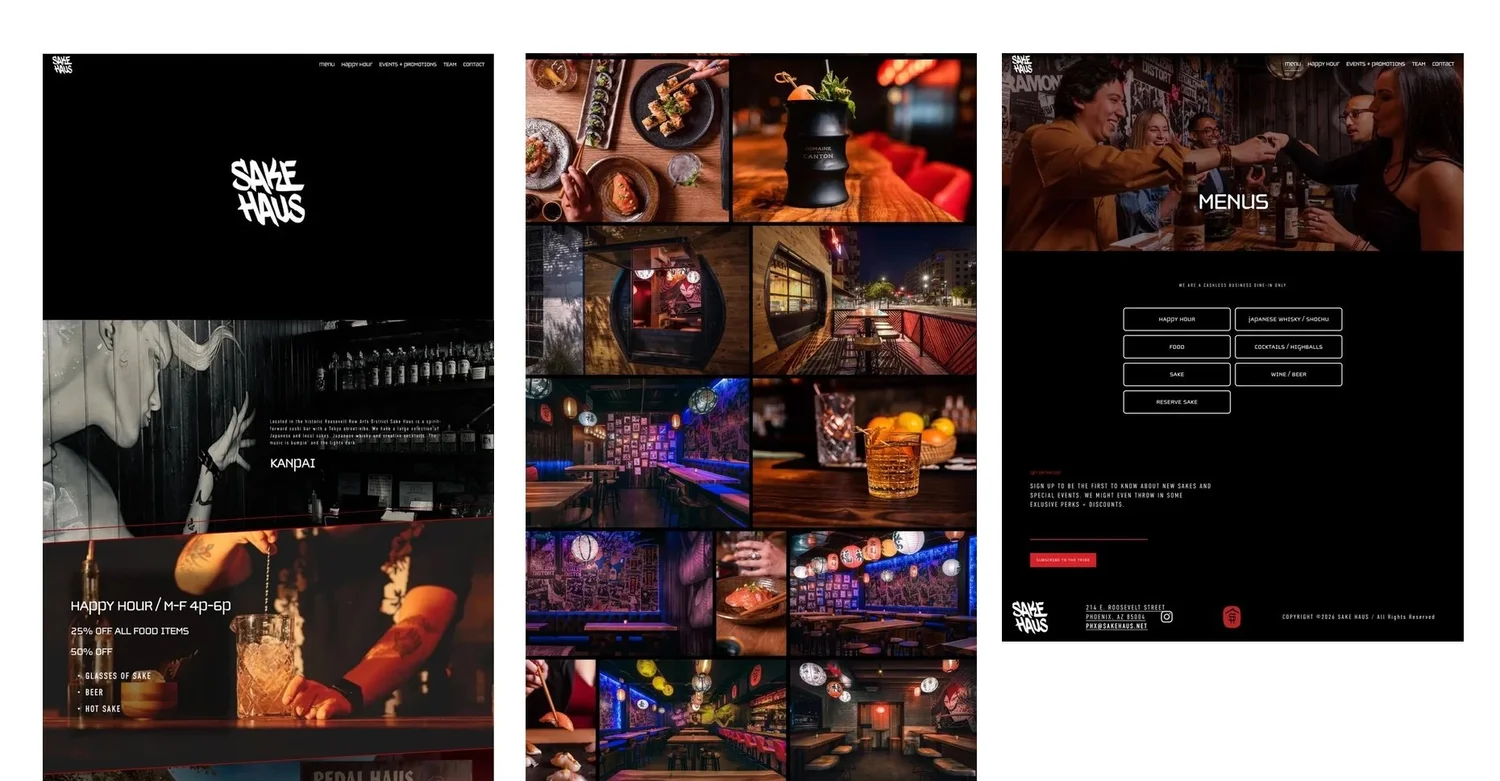
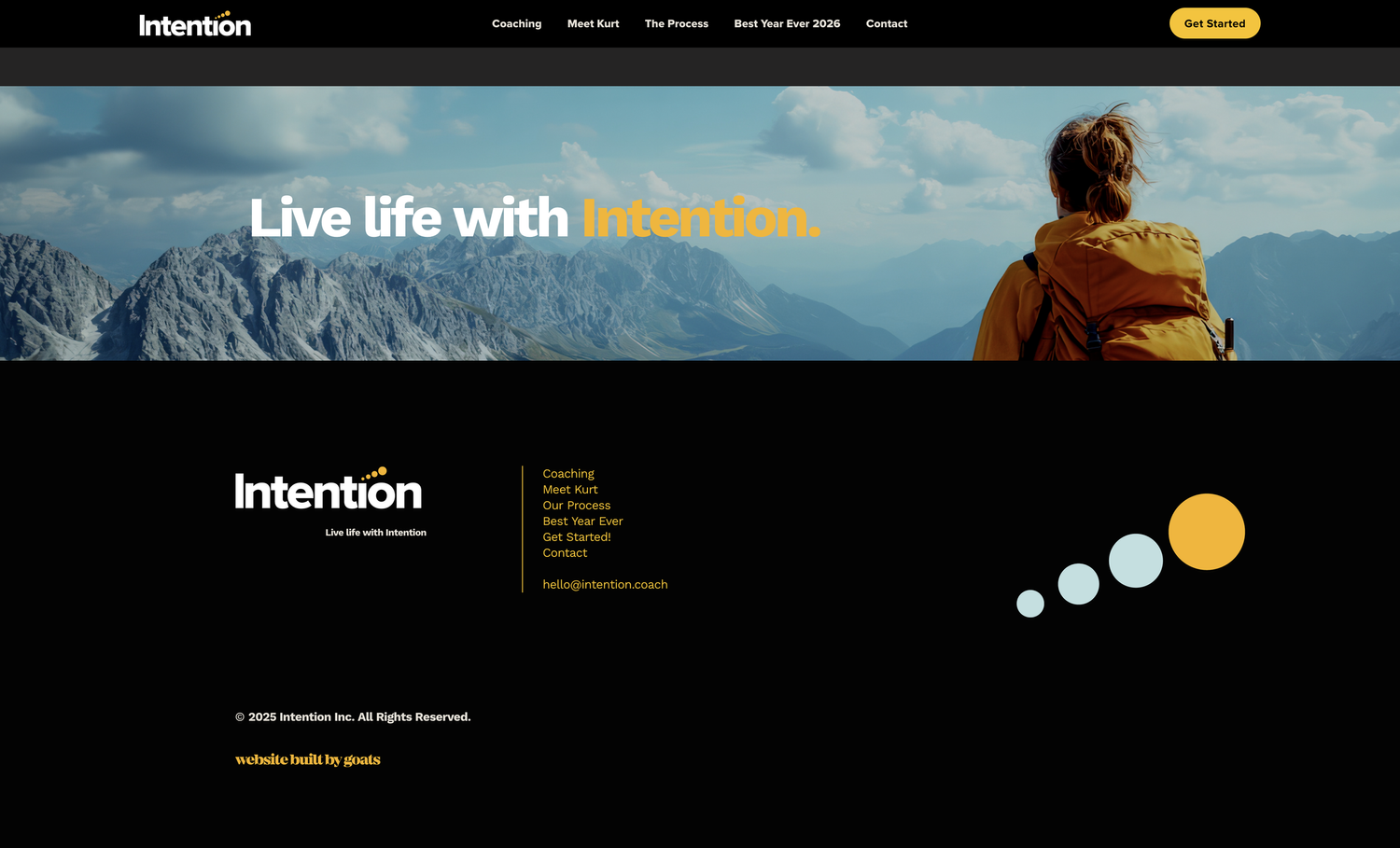
See the work we've done for companies like Firmspace, Pedal Haus, Sake Haus and Après Ski Vodka in our case studies, or read about the Authority Install.
Get a straight answer
Get a website recommendation for your business
Tell us about your business and your current site. You'll get a short, honest take on what to fix first and what a rebuild would involve.
How to choose a web design company: FAQs
What questions should I ask a web designer before hiring?
Who should own my website and domain?
How much should I pay a website designer?
Should I hire a freelancer, an agency, or use an AI website builder?
What is the 3 second rule in website design?
It's industry shorthand, not a formal standard: within about three seconds, a visitor should know what you do, who it's for and what to do next, and the page should already have loaded. People form first impressions in as little as 50 milliseconds,6 and Google's benchmark for a good load is under 2.5 seconds.21
What are the 7 C's of website design?
From Rayport and Jaworski's framework: context, content, community, customization, communication, connection and commerce.12 For a service business, context and content (design and message) do most of the work.
Is web design still in demand in 2026?
Yes. The Bureau of Labor Statistics projects employment of web developers and digital designers to grow 5% from 2025 to 2035, faster than average, with about 13,600 openings a year.1
Sources
- US Bureau of Labor Statistics, Web Developers and Digital Designers, Occupational Outlook Handbook (2026)
- Network Solutions, How to Choose a Web Design Company (2026)
- GoDaddy, Outsourcing your web design and development? Read this first (2026)
- Moburst, Web Design Agency Checklist: 15 Questions to Ask Before You Hire (2026)
- Atak Interactive, How to Choose the Right Web Design Agency: Top 10 Tips (2024)
- Nature News, Web users judge sites in the blink of an eye (Lindgaard et al., Behaviour & Information Technology) (2006)
- Google Research, The role of visual complexity and prototypicality regarding first impression of websites (2012)
- ClickZ, Study: For Site Cred, Looks Matter (Stanford Persuasive Technology Lab) (2002)
- web.dev (Google), Milliseconds Make Millions (Deloitte Digital) (2020)
- Think with Google, New industry benchmarks for mobile page speed (2017)
- Nielsen Norman Group, How Long Do Users Stay on Web Pages? (2011)
- International Journal of Electronic Commerce, A Framework for the Study of Customer Interface Design for Mobile Commerce (Lee & Benbasat) (2004)
- DreamHost, 2026 Local Business Trust Index (2026)
- BrightLocal, Local Consumer Review Survey 2026 (2026)
- Pew Research Center, Google users are less likely to click on links when an AI summary appears (2025)
- Gartner, 61% of B2B buyers prefer a rep-free buying experience (2025)
- Wix Help Center, Exporting or embedding your Wix site elsewhere (2026)
- Squarespace Help Center, Exporting your site (2026)
- US Copyright Office, Circular 30: Works Made for Hire (2024)
- WPZOOM, Business Website Costs in 2026 (2026)
- web.dev (Google), Web Vitals (2024)
Authority Scorecard
See how your website stacks up
A no-cost assessment of where your website builds trust and where it loses leads, before you hire anyone.
Get my Authority Score